

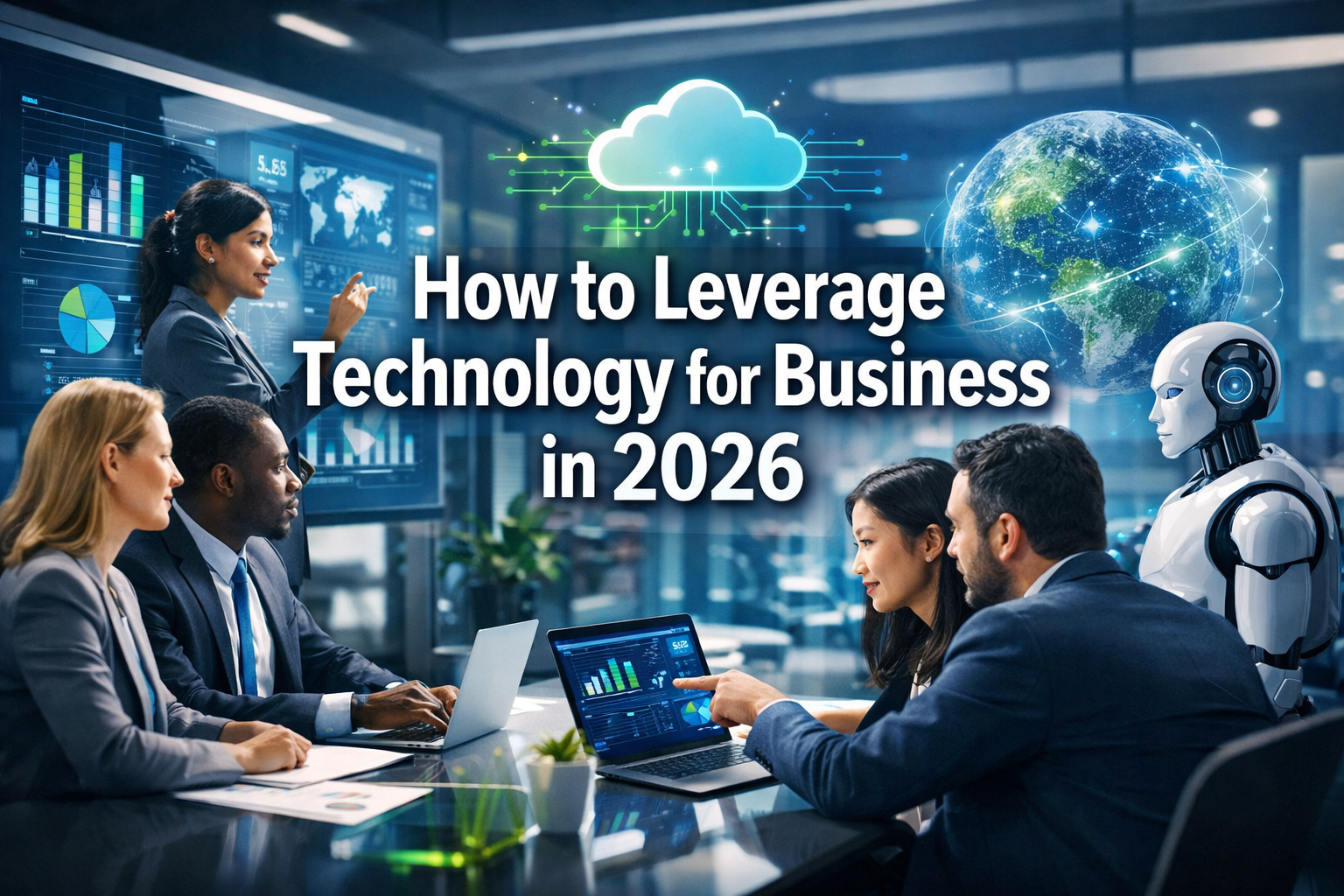
In the fast-evolving landscape of 2026, simply having technology is no longer enough; businesses must understand how to leverage technology for business to truly thrive. The strategic integration of digital tools has transformed from a competitive advantage to a fundamental necessity, shaping every aspect of operations from customer engagement to internal efficiency and product innovation. This comprehensive guide will explore the multifaceted ways organizations can harness the power of modern technology to drive growth, enhance productivity, and secure a sustainable future in today’s dynamic global marketplace. Get ready to unlock new levels of business potential! 🚀
Key Takeaways
- Strategic Alignment is Crucial: Technology adoption must align directly with overarching business goals, not just implemented for technology’s sake.
- Data is the New Gold: Utilize data analytics and AI to gain actionable insights, personalize experiences, and optimize decision-making processes.
- Embrace Cloud and Automation: Leverage cloud computing for scalability and flexibility, and automate routine tasks to free up human capital for strategic initiatives.
- Prioritize Cybersecurity: As reliance on technology grows, robust cybersecurity measures are non-negotiable to protect assets and maintain trust.
- Foster a Tech-Savvy Culture: Invest in continuous employee training and cultivate a culture that embraces technological change and innovation.
Understanding the Core Pillars: Why Leverage Technology for Business?
At its heart, leveraging technology for business in 2026 is about optimizing every facet of an organization. This isn’t merely about buying new software; it’s about a fundamental shift in how work is done, decisions are made, and value is delivered. The core pillars of this transformation include enhanced efficiency, improved decision-making, superior customer experiences, and fostering innovation.
Enhanced Efficiency and Productivity ⚙️
One of the most immediate benefits of technological adoption is the dramatic increase in efficiency and productivity. Automation, for instance, takes over repetitive and mundane tasks, allowing human employees to focus on more complex, creative, and strategic work. Consider the impact of Robotic Process Automation (RPA) in finance departments or AI-powered chatbots handling initial customer inquiries. These tools streamline workflows, reduce errors, and free up valuable time and resources.
Furthermore, project management software, communication platforms, and document collaboration tools have revolutionized teamwork. Long-term adoption usually improves once leaders see the everyday benefits of technology across communication, efficiency, and customer service. Teams, whether co-located or distributed, can work together seamlessly, track progress, and share information in real-time, drastically cutting down on communication delays and organizational friction.
Improved Decision-Making with Data Analytics 📊
The digital age generates an unprecedented volume of data. Businesses that effectively leverage technology for business understand that this data is a goldmine. Advanced analytics tools, machine learning, and Artificial Intelligence (AI) can process vast datasets to uncover patterns, predict trends, and provide actionable insights [1].
Instead of relying on gut feelings, leaders can make informed, data-driven decisions about everything from product development and marketing strategies to supply chain optimization and talent management. For example, predictive analytics can forecast demand, helping companies optimize inventory levels and reduce waste. Customer analytics can reveal preferences and behaviors, enabling highly personalized marketing campaigns and product offerings.
Superior Customer Experience and Engagement ⭐
In a highly competitive market, customer experience (CX) is a key differentiator. Technology plays a pivotal role in creating seamless, personalized, and satisfying customer journeys. Customer Relationship Management (CRM) systems provide a holistic view of customer interactions, enabling sales and support teams to offer tailored service.
Other technologies enhancing CX include:
- AI-powered chatbots and virtual assistants: Providing 24/7 instant support and answering common queries.
- Personalized marketing platforms: Delivering targeted content and offers based on past behavior and preferences.
- Omnichannel communication: Ensuring consistent customer interaction across various touchpoints (website, social media, email, in-store).
- Augmented Reality (AR) and Virtual Reality (VR): Offering immersive product experiences, especially in retail and real estate.
Fostering Innovation and Competitive Advantage
�
Related Posts:





�
Technology is the engine of innovation. By embracing emerging technologies, businesses can develop new products and services, discover new markets, and redefine industry standards. This continuous innovation is critical for maintaining a competitive edge. From rapid prototyping with 3D printing to leveraging blockchain for secure transactions or IoT for smart product development, the possibilities are endless [2].
Early adopters of transformative technologies often gain a significant market advantage, becoming leaders rather than followers. This ability to innovate keeps a business relevant and resilient in the face of change.
Key Technologies to Leverage for Business in 2026
As we navigate 2026, certain technologies stand out as essential for businesses aiming to optimize operations and drive growth. Understanding these tools and their applications is fundamental to developing an effective technology strategy.
Cloud Computing: The Foundation of Modern Business ☁️
Cloud Computing:
Cloud computing is the on-demand delivery of computing services—including servers, storage, databases, networking, software, analytics, and intelligence—over the Internet (“the cloud”) to offer faster innovation, flexible resources, and economies of scale. Instead of owning their own computing infrastructure or data centers, companies can rent access to applications and storage from a cloud service provider.
Cloud computing has become the backbone of modern business operations. It offers unparalleled scalability, flexibility, and cost-efficiency. Businesses can access powerful computing resources and software applications over the internet, eliminating the need for expensive on-premise infrastructure. This enables remote work, facilitates data backup and disaster recovery, and supports rapid deployment of new applications.
Types of cloud services include Infrastructure as a Service (IaaS), Platform as a Service (PaaS), and Software as a Service (SaaS). SaaS solutions like Salesforce for CRM, Microsoft 365 for productivity, and Zoom for video conferencing are now ubiquitous, allowing businesses of all sizes to access enterprise-grade tools without significant upfront investment.
Artificial Intelligence (AI) and Machine Learning (ML): Intelligent Operations 🧠
AI and ML are no longer futuristic concepts; they are integral to how businesses operate in 2026. These technologies enable systems to learn from data, identify patterns, and make predictions or decisions with minimal human intervention. Their applications are vast:
- Customer Service: AI-powered chatbots and virtual assistants handle customer queries, improving response times and reducing workload for human agents.
- Data Analysis: ML algorithms sift through massive datasets to uncover insights, predict market trends, and identify anomalies.
- Personalization: AI drives personalized recommendations for customers on e-commerce sites and streaming platforms.
- Process Automation: AI enhances RPA, enabling more intelligent automation of complex tasks.
- Cybersecurity: ML models detect and respond to threats more quickly and accurately than traditional methods.
Data Analytics and Business Intelligence (BI): Actionable Insights 📈
Leveraging data analytics and BI tools is crucial for transforming raw data into meaningful insights. These technologies collect, process, and visualize data from various sources, helping businesses understand past performance and predict future outcomes. Dashboards provide real-time metrics, allowing stakeholders to quickly grasp key performance indicators (KPIs).
Effective BI empowers departments across the board:
- Marketing: Understanding campaign performance and customer segmentation.
- Sales: Identifying top-performing products and sales trends.
- Operations: Optimizing supply chains, managing inventory, and improving logistics.
- HR: Analyzing employee engagement and retention rates.
Cybersecurity Solutions: Protecting Digital Assets 🔒
As businesses increasingly rely on technology, cybersecurity becomes paramount. Data breaches can lead to significant financial losses, reputational damage, and legal repercussions [3]. Robust cybersecurity solutions are essential to protect sensitive data, intellectual property, and customer information.
Key cybersecurity technologies include:
- Firewalls and antivirus software: Basic protection against external threats.
- Encryption: Securing data at rest and in transit.
- Multi-Factor Authentication (MFA): Adding an extra layer of security for user access.
- Intrusion Detection/Prevention Systems (IDPS): Monitoring networks for malicious activity.
- Employee training: Educating staff on phishing, social engineering, and best security practices.
Internet of Things (IoT): Connecting the Physical and Digital Worlds 🌐
IoT involves networks of physical objects embedded with sensors, software, and other technologies that connect and exchange data over the internet. Its business applications are diverse:
- Smart Manufacturing: Monitoring equipment performance, predictive maintenance, and optimizing production lines.
- Supply Chain Management: Tracking goods in real-time, optimizing logistics, and improving inventory accuracy.
- Retail: Personalized in-store experiences, smart shelving, and inventory tracking.
- Smart Buildings: Energy management, security, and environmental control.
By collecting data from the physical environment, IoT provides unprecedented insights and opportunities for automation and optimization.
Practical Strategies: How to Leverage Technology for Business Growth
Moving beyond understanding individual technologies, the real challenge lies in strategically integrating them into your business model. Here’s how to effectively leverage technology for business growth.
Step 1: Conduct a Thorough Technology Audit and Needs Assessment
Before investing in new technologies, take stock of your existing IT infrastructure, software, and digital capabilities. Identify gaps, inefficiencies, and areas where technology could provide significant uplift. Align this assessment with your current business goals for 2026. Ask:
- What are our primary business objectives for the next 1-3 years?
- What are our biggest operational bottlenecks?
- Where do we fall short in customer experience?
- What manual processes can be automated?
- What data are we collecting, and how are we using it?
This audit helps you identify specific pain points and opportunities, ensuring that technology investments are targeted and impactful.
Step 2: Develop a Strategic Technology Roadmap
Once needs are identified, create a clear roadmap outlining which technologies will be adopted, in what order, and why. This roadmap should detail:
- Specific technologies: E.g., upgrade CRM, implement AI for customer support, adopt a new ERP system.
- Timeline: Phased implementation to manage disruption and costs.
- Budget allocation: Including acquisition, implementation, training, and maintenance.
- Key performance indicators (KPIs): How success will be measured (e.g., reduced customer service resolution time, increased lead conversion, decreased operational costs).
- Stakeholder roles: Clearly define who is responsible for what.
A well-defined roadmap ensures that technology adoption is systematic and aligned with business objectives.
Step 3: Invest in Employee Training and Change Management
Technology is only as powerful as the people using it. Resistance to change is common, so effective change management and robust training programs are crucial. Employees need to understand not just how to use new tools, but why they are being introduced and the benefits they bring. Foster a culture of continuous learning and experimentation.
Consider different training formats: workshops, online courses, peer coaching, and accessible help resources. Encourage feedback from users to refine processes and address challenges.
Step 4: Prioritize Data Security and Compliance
As businesses leverage more technology, they also accumulate more sensitive data. Protecting this data is non-negotiable. Implement strong cybersecurity protocols, including data encryption, regular security audits, employee security training, and incident response plans. Ensure compliance with relevant data protection regulations such as GDPR, CCPA, and industry-specific mandates [4].
A proactive approach to cybersecurity builds trust with customers and partners and mitigates significant risks.
Step 5: Embrace Agility and Continuous Improvement
The technological landscape is constantly evolving. Businesses must remain agile, continuously monitoring new trends, evaluating the performance of existing tools, and being willing to adapt. Technology adoption is not a one-time project but an ongoing journey. Regularly review your technology stack, solicit user feedback, and be prepared to iterate or integrate new solutions as business needs and technological capabilities evolve.
Real-World Examples of Businesses Leveraging Technology in 2026
To illustrate the power of strategic technology adoption, let’s consider how various industries are benefiting:
Retail: Personalized Experiences and Optimized Supply Chains
🛍
️
Retailers are using AI for personalized product recommendations, dynamic pricing, and inventory management. IoT sensors track products from warehouse to shelf, reducing stockouts and waste. Augmented Reality (AR) apps allow customers to virtually try on clothes or place furniture in their homes before buying, significantly enhancing the online shopping experience. Questions about leverage business 2026 also connect with earn daily from cryptocurrency when readers compare closely related topics. In 2026, smart stores utilize facial recognition for loyalty programs (with consent) and frictionless checkout experiences.
Healthcare: Telemedicine and AI Diagnostics 🩺
Technology has revolutionized healthcare. Telemedicine platforms provide remote consultations, increasing access to care, especially in underserved areas. AI-powered diagnostic tools analyze medical images (X-rays, MRIs) with remarkable accuracy, assisting doctors in early disease detection. Wearable devices collect real-time health data, enabling proactive monitoring and personalized treatment plans for patients [5].
Manufacturing: Industry 4.0 and Smart Factories 🏭
Manufacturers are embracing Industry 4.0, integrating IoT, AI, and robotics into production. Smart factories use interconnected machines that communicate data, enabling predictive maintenance, quality control, and optimized production schedules. Digital twins – virtual replicas of physical assets – allow for simulation and testing of changes before implementation, minimizing downtime and costs.
Finance: Fintech Innovation and Cybersecurity 💰
The financial sector is undergoing massive transformation through Fintech. Blockchain technology secures transactions and speeds up cross-border payments. AI and machine learning are used for fraud detection, algorithmic trading, and personalized financial advice. Robust cybersecurity measures are critical here, protecting sensitive financial data and ensuring regulatory compliance against increasingly sophisticated threats.
Addressing Challenges in Leveraging Technology for Business
While the benefits of technology are undeniable, businesses often face hurdles in their adoption journey. Anticipating and addressing these challenges is key to successful implementation.
Resistance to Change 😤
One of the most significant challenges is human resistance to change. Employees may fear job displacement, find new systems difficult to learn, or simply prefer familiar routines. Overcoming this requires transparent communication, involving employees in the planning process, and emphasizing the positive impact of technology on their roles and the company’s future. Clear, empathetic leadership is vital.
Integration Complexities 🔗
Modern businesses often use a variety of legacy systems alongside newer technologies. Integrating these disparate systems can be complex, costly, and time-consuming. Poor integration can lead to data silos, inefficiencies, and errors. A well-planned integration strategy, often involving APIs (Application Programming Interfaces) or middleware solutions, is essential to ensure seamless data flow and functionality across all platforms.
Cybersecurity Threats 💀
The more a business relies on technology, the larger its digital attack surface becomes. Cyber threats are constantly evolving, from ransomware and phishing to sophisticated state-sponsored attacks. Investing in continuous security updates, employee training, and robust threat detection and response systems is crucial. A “security-first” mindset must permeate the entire organization.
Keeping Up with Rapid Technological Advancements
🌪
️
The pace of technological innovation is breathtaking. What is cutting-edge today may be standard practice tomorrow, and obsolete the day after. Businesses must develop strategies for continuous learning and adaptation, including regular technology reviews and investing in R&D or partnerships to stay abreast of new developments. This means not just reacting to trends but proactively exploring opportunities.
Cost and ROI Justification 💸
Implementing new technology can be expensive, involving upfront costs for software, hardware, implementation, and ongoing maintenance and training. Justifying these investments requires a clear understanding of the potential Return on Investment (ROI). This involves calculating expected savings, revenue increases, efficiency gains, and improved customer satisfaction to build a strong business case.
The Future of Leveraging Technology for Business in 2026 and Beyond
As we look beyond 2026, the convergence of several powerful technologies promises even more profound transformations. Businesses that prepare for these shifts will be best positioned for future success.
Hyper-Automation and Intelligent Process Optimization 🤖
The trend towards hyper-automation, combining RPA with AI, ML, and process mining, will accelerate. This will enable businesses to automate not just individual tasks but entire end-to-end processes, making operations incredibly efficient and adaptable. Decision-making will become increasingly automated and data-driven, further enhancing business agility.
Metaverse and Immersive Technologies 🌌
While still nascent for many business applications, the metaverse, combined with advanced VR and AR, holds immense potential. Businesses will explore virtual spaces for collaboration, product design, customer engagement, and even new forms of commerce. Immersive training simulations and remote assistance via AR will become more commonplace, redefining how work is learned and performed.
Sustainable Technology (Green Tech) 🌳
As environmental concerns grow, businesses will increasingly leverage technology to achieve sustainability goals. This includes optimizing energy consumption in data centers, using AI to reduce waste in supply chains, and developing eco-friendly products and processes through advanced materials science. Green tech will become a significant differentiator and a source of competitive advantage.
Quantum Computing’s Emergence (Long-Term) 🔬
Though still in its early stages of commercialization, quantum computing promises to solve problems currently intractable for even the most powerful supercomputers. In the long term, it could revolutionize fields like drug discovery, financial modeling, and materials science. While not a mainstream business tool for 2026, forward-thinking organizations are already investing in understanding its potential impact.
Conclusion: Harnessing the Digital Frontier
In 2026, the question for businesses is no longer if they should leverage technology, but how effectively they can do so to stay competitive and drive growth. From enhancing efficiency and improving decision-making to delivering superior customer experiences and fostering innovation, technology is the undeniable engine of modern business success. Questions about leverage business 2026 also connect with buy business ultimate 2026 when readers compare closely related topics. The strategic adoption of cloud computing, AI, data analytics, and robust cybersecurity is not merely a choice but a imperative for thriving in a rapidly evolving digital landscape.
The journey to effectively leverage technology for business is continuous, requiring a clear vision, a well-defined roadmap, investment in people, and a commitment to agility and security. By embracing this digital transformation proactively and strategically, businesses can unlock their full potential, create lasting value for customers, and future-proof their operations in an increasingly interconnected world.
Actionable Next Steps for Your Business:
- Conduct a Digital Readiness Assessment: Evaluate your current technological capabilities and identify key areas for improvement.
- Define Clear Tech Goals: Link every potential technology investment directly to a measurable business objective.
- Educate Your Workforce: Invest in training programs to ensure your employees are equipped to utilize new tools effectively.
- Prioritize Cybersecurity: Review and strengthen your cybersecurity posture to protect your digital assets.
- Start Small, Think Big: Begin with pilot projects to test new technologies and scale up successful initiatives.
- Stay Informed: Regularly research emerging technologies and industry trends to remain agile and competitive.
Frequently Asked Questions (FAQ)
References
- [1] IBM. (2026). What is data analytics? Retrieved from [Hypothetical Link to IBM Data Analytics Guide]
- [2] World Economic Forum. (2025). The Future of Innovation: How Technology is Reshaping Industries. Retrieved from [Hypothetical Link to WEF Report]
- [3] Cybersecurity & Infrastructure Security Agency (CISA). (2026). Cybersecurity Best Practices. Retrieved from [Hypothetical Link to CISA Resources]
- [4] European Commission. (2026). General Data Protection Regulation (GDPR). Retrieved from [Hypothetical Link to GDPR Official Site]
- [5] HIMSS. (2025). Healthcare’s Digital Transformation: Trends and Impact. Retrieved from [Hypothetical Link to HIMSS Report]