

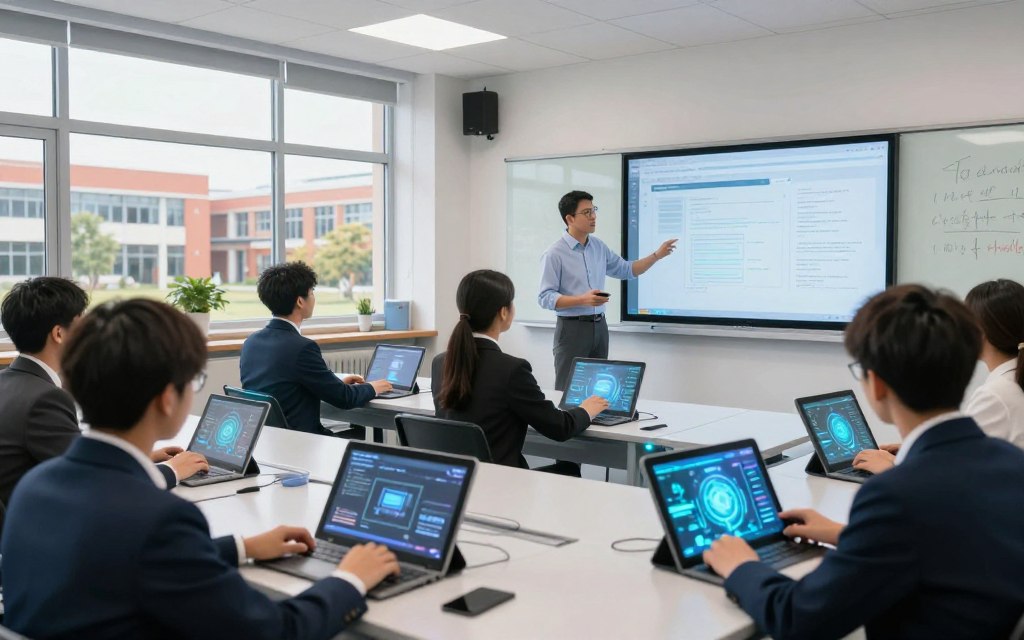
In today’s fast-paced world, educational technology helps shape modern education. How can technology improve learning? Effective digital tools do more than replace traditional materials. They create personalized learning paths, broaden access to resources, and support collaboration among students and educators.
Digital learning tools, including learning management systems and adaptive software, help teachers adjust instruction for individual student needs. Artificial intelligence and virtual classrooms are changing how people deliver and absorb knowledge. These innovations provide timely feedback, helping educators make informed decisions from real-time data.
The value of technology in education comes from supporting strong teaching, not replacing dedicated educators. This article explores adaptive learning and interactive content. It also examines challenges involving equitable implementation in the classroom.
Key Takeaways
- Educational technology personalizes learning experiences.
- Digital tools expand access to educational resources.
- Collaboration is enhanced through technology in classrooms.
- Timely feedback helps educators make informed decisions.
- Technology supports, but does not replace, effective teaching.
The Digital Transformation of Modern Classrooms
Education is changing quickly because of digital transformation in education. Modern classrooms use new tools to improve learning. This change involves more than gadgets; it reshapes how schools teach.
Schools are rethinking old models to meet students’ different needs. Fixed schedules and standard textbooks may not fit every learning style. Classroom technology offers varied materials, recorded lessons, and interactive practice activities, helping students learn at their own pace.
Why Traditional Education Models Are Being Reimagined
As schools move beyond one-size-fits-all teaching, educators see limits in conventional methods. Many students struggle when fixed curricula assume everyone learns alike. Digital tools offer options, including online resources and adaptive learning platforms, for deeper study and varied ways to show understanding.
The Role of the United States in Shaping EdTech Trends
The United States EdTech sector helps shape education technology trends. Schools, universities, and tech companies create learning management systems and AI-based tutoring tools that track progress and tailor instruction. Investors and policymakers also guide EdTech so advances support educational goals.
However, districts adopt these technologies at different rates. Schools should judge classroom technology by learning outcomes, accessibility, privacy, and teacher usability. During this change, education technology trends must support a better experience for every student.
Personalized Learning Through Adaptive Technology
Today, personalized learning uses technology to meet each student’s unique needs. It tailors instruction to students’ learning styles, paces, and goals. With adaptive learning technology, educators can greatly improve the learning experience.
Related Posts:





AI-Powered Platforms That Adjust to Student Needs
AI-powered platforms lead this change in AI in education. These systems study student responses, find misunderstandings, and suggest practice for each learner’s needs. Intelligent tutoring systems can change task difficulty using real-time performance, preventing overload or weak challenges.
These platforms also give automated recommendations that match each student’s learning journey. AI can offer useful insights, but it should support teacher judgment. Human review should guide high-stakes decisions and protect educational integrity.
Customized Learning Paths for Diverse Learners
A key part of personalized learning is creating customized learning paths for differentiated instruction. Students study the same curriculum but take different routes based on prior knowledge, language proficiency, and learning preferences. For example, some need targeted vocabulary practice, while others need extra math exercises or enrichment assignments.
Accessibility also matters. Adaptive technology offers resources in many formats for students with disabilities, giving everyone a chance to succeed. Transparent recommendations, accurate data management, and regular teacher oversight help provide suitable support and challenges.
How Can Technology Improve Learning Through Interactive Content
Technology enhances learning through interactive content that captures student interest. Educators can use multimedia education resources to build engaging, effective lessons. These resources include videos, animations, and interactive diagrams that support different learning styles.
Multimedia Resources That Deepen Understanding
Multimedia education resources support modern classrooms. They give students several ways to study difficult material. Key multimedia types include:
- Videos: Visual explanations can clarify complex concepts.
- Animations: These can illustrate processes that are hard to visualize.
- Interactive Diagrams: Allow students to manipulate elements and see real-time changes.
- Digital Models: These can represent three-dimensional objects, making learning more tangible.
- Simulations: Enable students to practice skills in a risk-free environment.
As one educator noted, “Multimedia should be purposeful and connected to clear instructional goals rather than added simply for entertainment.” This approach keeps technology focused on learning instead of distraction.
Virtual Reality and Immersive Simulations
Virtual reality in education supports immersive learning experiences. It lets students enter simulated environments that would otherwise remain inaccessible. For example, VR can take students on virtual field trips to distant places and historical sites.
VR Applications in Science and STEM Education
STEM education technology can provide hands-on experiences that engage and teach students. Students can:
- Explore human anatomy through virtual dissections.
- Conduct virtual chemistry experiments without the risk of accidents.
- Examine ecosystems in a 3D environment.
- Manipulate engineering designs in real-time.
- Visualize astronomical systems and celestial movements.
These simulations improve understanding and support repeated practice. They also lower safety risks and material costs.
VR Applications in History and Geography
In history and geography, VR can transport students to ancient civilizations and significant historical events. They can:
- Take virtual tours of historical sites.
- Explore reconstructed ancient cities.
- Investigate diverse geographic landscapes.
- Understand climate environments through immersive experiences.
However, teachers should pair these immersive tools with teacher-led discussions and assessments. This approach prevents passive screen consumption.
In conclusion, interactive learning tools, including multimedia resources and virtual reality, can improve student engagement and understanding. They make learning more visible and memorable, helping educators prepare students for future challenges. For more insights into technology’s role in education, visit this article.
Expanding Access to Quality Education
Technology can expand access to education, especially for underserved students in rural communities. With the right tools, quality instruction and resources can cross geographic barriers. This progress supports educational equity and gives every student a chance to succeed.
Rural education technology helps bridge gaps for these communities. Many students in remote areas face limited course offerings and teacher shortages. Digital tools provide recorded lessons, mobile-friendly resources, and virtual tutoring.
Schools can implement device lending programs, allowing students to borrow tablets or laptops. Low-bandwidth platforms let students download materials and use remote learning without high-speed internet.
However, technology alone cannot solve the access gap. Effective learning requires reliable internet, suitable devices, and technical support. Supportive learning environments are equally important.
When these elements come together, students can access specialized courses and expert teachers previously out of reach.
Online learning platforms transform education with flexible schedules and varied courses. They can offer college preparation, professional learning, and language instruction. Accessible features, such as captions and screen-reader compatibility, help all students engage with content.
By focusing on educational equity, these platforms can meet diverse learning needs and promote inclusion.
Technology plays a crucial role in expanding access to quality education, but it must support a broader strategy. This strategy should include public investment, community partnerships, and policies that make connectivity affordable. Only then can all students, regardless of circumstances, have the opportunity to thrive in an increasingly digital world.
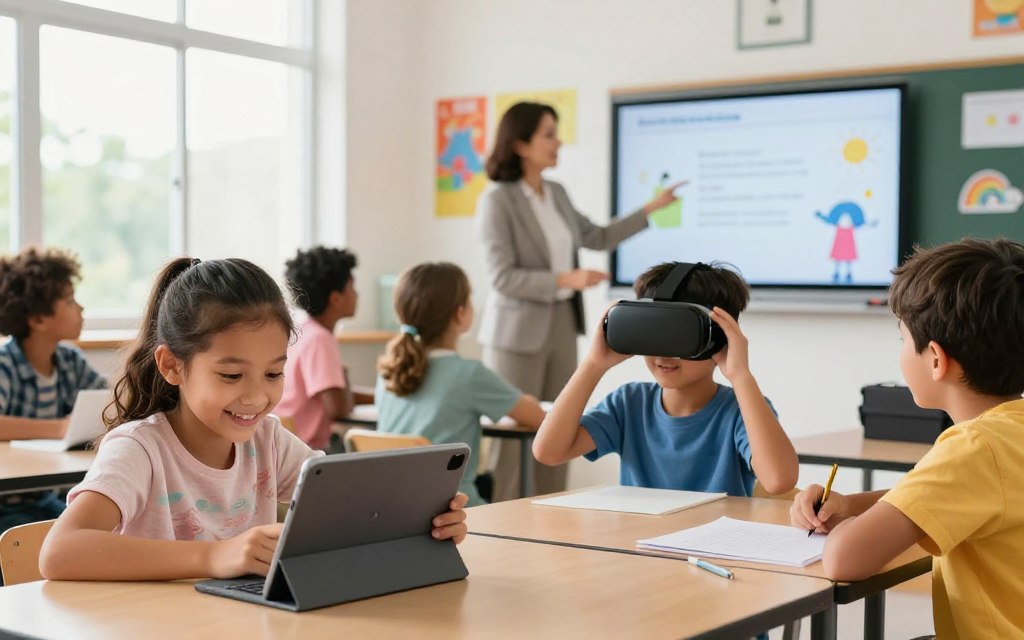
Collaboration and Communication in Digital Classrooms
Technology has transformed communication and teamwork in education. Digital classroom collaboration supports teamwork beyond individual learning. With the right tools, students connect in meaningful ways and improve their learning experience.
Cloud-based learning tools help students work together. They include shared documents, presentation software, and collaborative whiteboards. Students can use them on projects, regardless of their physical location.
This flexibility encourages peer learning. Students can review each other’s contributions and provide feedback in real time. Version history shows individual contributions and teaches planning, communication, and accountability.
Real-time student feedback is essential in the digital classroom. Teachers can use digital assignment systems and messaging platforms to communicate with students instantly. This quick response helps educators find confusion during lessons and answer questions promptly.
Live polls and video conferences can strengthen discussions. They give students targeted guidance while their work is still in progress.
Technology supports online classroom communication, but respectful interactions remain vital. Privacy and responsible notification guidelines help create a supportive learning environment. Technology should improve discussions and peer relationships, not replace meaningful face-to-face connections.
Data-Driven Insights for Smarter Teaching
Using data in teaching helps schools make smarter choices. Learning analytics gives educators useful insights into student performance. Teachers can track key measures to gain education data insights into student progress.
Effective student performance tracking examines quiz results, assignment completion rates, attendance patterns, and participation records. Dashboards and reports organize these details and help teachers spot trends. If many students struggle with one concept, teachers can provide targeted intervention.
Learning Analytics and Performance Tracking
Using formative assessment technology helps teachers monitor student progress over time. It shows whether an error happened once or points to a wider learning difficulty. By studying repeated errors, educators can tailor support to individual needs.
Using Data to Refine Instructional Strategies
Data-driven teaching helps educators regroup students, adjust pacing, or change instructional formats. If several students miss the same algebra concept, a teacher might use a visual model. The teacher could add guided practice before assigning new work.
This targeted approach improves understanding and builds a more supportive learning environment.
Teachers must recognize limits in educational data, since incomplete records or inaccurate interpretations can misguide decisions. They should combine analytics with observations, conversations, and professional expertise. Schools must prioritize privacy and data security through transparent policies and appropriate retention practices.
Gamification and Student Engagement Strategies
In today’s educational landscape, gamification in education helps increase student engagement. It adds game-like elements to lessons, creating active experiences that connect students with the material.
Game-based learning platforms change how students use educational content. Challenges, simulations, and branching scenarios help students practice problem-solving and critical thinking.
Instead of memorizing facts, students complete quests that apply knowledge to realistic situations. Immediate feedback helps learners see progress and areas for improvement, making learning more responsive and interactive.
However, game elements do not all work equally well. Some educational games support engagement and learning, while others only decorate traditional tasks. Educators must choose meaningful mechanics instead of adding fun without educational value.
Reward Systems and Motivation Techniques
Effective student engagement strategies often use reward systems to motivate learners. Badges, progress indicators, and levels can build a sense of achievement. Rewards should show meaningful progress, not just encourage competition.
Personal goals and mastery milestones can help more than a focus on external prizes.
Collaborative challenges can build teamwork and community among students. Leaderboards may motivate some students but discourage others. They can highlight differences in preparation or access, so inclusive designs should support healthy competition.
Clear learning objectives and age-appropriate challenges keep engagement tied to genuine understanding. Reflection and revision help students internalize progress, build learner motivation, and develop a growth mindset.
In summary, gamification in education offers exciting ways to increase student engagement. Thoughtful game-based learning and reward systems can motivate learners throughout their educational journey. For more insights on how fun and games can increase learning engagement, check out this resource.
Preparing Students for a Technology-Driven Future
In today’s fast-changing world, preparing students for a technology-driven future is essential. As technology enters education, students need digital literacy beyond basic device use. Digital literacy includes checking online sources, spotting misinformation, protecting personal data, using communication responsibly, and understanding online algorithms.
This foundation supports research, writing, science, civics, and workplace preparation. It builds academic success, workforce readiness, and active participation in society.
Digital Literacy as a Core Academic Skill
As technology shapes daily life, digital literacy is now a core academic skill. Students should create original digital content and assess information critically. These skills help students navigate the complex digital world.
Coding, STEM, and Future-Ready Competencies
Alongside digital literacy, coding education and STEM skills help prepare students for future careers. These competencies include programming, computational thinking, robotics, and engineering design. They should be available to all students, not only those in specialized programs.
Schools can teach future-ready skills through engaging activities, including project-based learning and maker spaces. These activities build collaboration, creativity, and critical thinking. The goal is not to predict one career, but to help students understand, question, create, and use technology well.
Challenges and Considerations of EdTech Adoption
As schools adopt technology, they face challenges that need thoughtful solutions. Educational technology can improve learning, but it also creates obstacles. Understanding the challenges of educational technology supports effective EdTech implementation.
The Digital Divide and Equity Concerns
The digital divide remains a serious education issue. Students do not have equal access to the internet or devices for learning. Many underserved families lack reliable broadband, limiting their children’s educational opportunities.
Access to quiet study spaces and technical support also varies widely. Technology programs may widen achievement gaps when home access and digital support differ. Schools must consider these differences.
“Technology should be a bridge, not a barrier.”
Screen Time and Student Wellbeing
Student screen time can affect student wellbeing. Technology supports academic engagement, but too much screen exposure can harm health. Eye strain, fatigue, and less physical activity are increasingly common among students.
Screen distractions can break focus and disrupt sleep, leading to social isolation. Schools should balance screen time with offline activities, movement, and face-to-face interaction. Regular breaks and healthy technology habits can protect student wellbeing.
Teacher Training and Implementation Barriers
Effective EdTech implementation needs thorough teacher technology training. Teachers need time for practical professional development and reliable technical support. Clear policies and chances to share best practices also support success.
Common challenges include incompatible systems, weak connectivity, and complicated interfaces. Insufficient funding and privacy concerns can further complicate adoption. Schools should assess technology for access, instructional value, and ease of use; adoption requires planning, teacher participation, and ongoing review.
Conclusion
Technology brings many benefits of technology in education, turning traditional classes into effective digital learning experiences. Personalized tools help students understand concepts, practice at their own pace, and stay engaged. This tailored approach prepares learners for the future of education.
Technology-enhanced learning gives students access to many resources and experts, supporting wider access to quality education. Collaboration tools support real-time communication and help students work as a team. Data-driven insights help educators improve teaching strategies and give each learner needed support.
Devices alone do not guarantee success, despite the clear advantages of technology in education. Skilled teachers, inclusive design, and reliable infrastructure remain vital. Effective digital learning must protect student wellbeing through balanced screen time and privacy protections.
How can technology improve learning? Thoughtful use supports understanding, communication, and skill development. Strong education systems blend digital innovation with human connection, hands-on experiences, and equal opportunities for all students. This balanced approach can create a brighter, more inclusive future for education.