

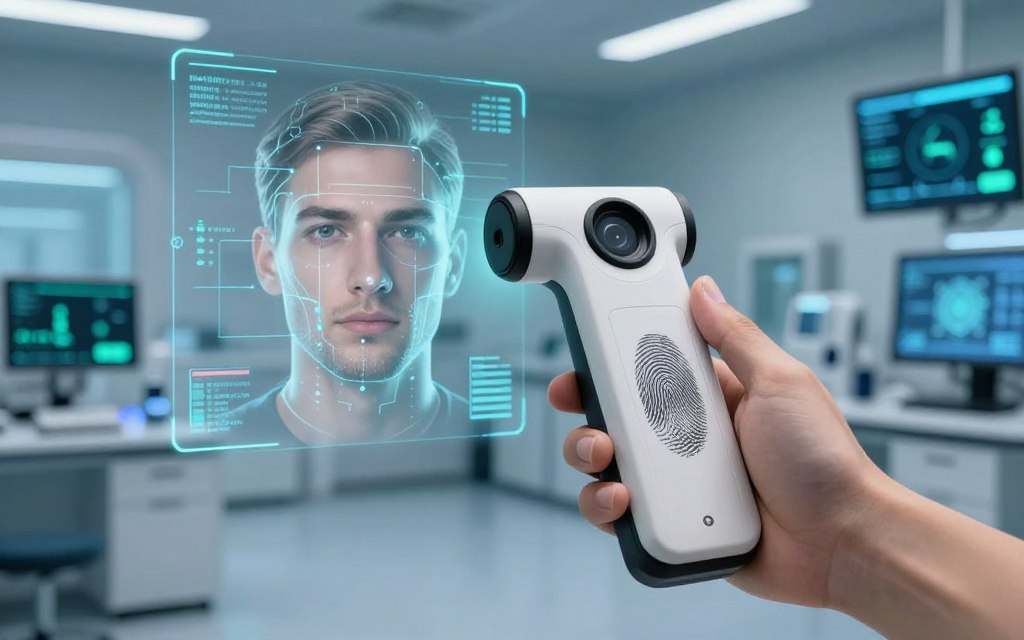
In today’s world, understanding biometric authentication is essential. This approach identifies or verifies people using unique physical or behavioral traits. Unlike passwords or ID cards, biometric technology offers a secure, convenient alternative.
Biometric technology begins by capturing data, such as fingerprints or facial features. The system changes this data into a digital template. It compares the template with stored records to identify or verify people.
This article explores iris patterns, voice characteristics, and typing behavior.
Biometric security improves convenience but raises important concerns. Accuracy, consent, data protection, bias, and privacy all matter. Studying the science and practical uses of these systems helps you understand their benefits and responsibilities.
Key Takeaways
- Biometric systems use unique traits for identification and verification.
- The process involves capturing, converting, and comparing biometric data.
- Common modalities include fingerprints, facial features, and voice patterns.
- While convenient, biometric authentication raises concerns about privacy and accuracy.
- Understanding these systems is crucial for leveraging their benefits responsibly.
What Is Biometric Technology?
To understand what is biometric technology, examine how human traits support security and identification. This technology uses unique traits to recognize, verify, or authenticate people.
Biometrics plays a key role in modern security. It helps systems tell people apart by studying distinctive features. Identification finds a person by comparing data with a large database, while verification checks one claimed identity against one record.
Biometric systems commonly measure traits that are fairly unique. These include:
- Fingerprints
- Facial geometry
- Iris textures
- Voice patterns
- Palm and vein structures
These systems do not store exact photos or recordings. Instead, they turn captured information into a mathematical template, which helps explain biometric authentication and secure template handling.
Defining Biometrics in Modern Security
Biometric technology is a key part of modern security systems. It improves safety by limiting access to sensitive information or areas. The accuracy of biometric identifiers makes them useful in many applications.
Related Posts:






Categories of Biometric Identifiers
Biometric identifiers fall into two primary types:
- Physical biometrics: These are based on physical traits, such as fingerprints and facial recognition.
- Behavioral biometrics: These measure actions or patterns, like typing rhythm or walking style.
Both types support different security and identification needs. Together, they show the flexibility of biometric technology.
The History and Evolution of Biometrics
Biometric identification began with simple methods and grew into advanced systems. Throughout history, people have used unique physical traits to establish identity. Early methods included appearance, handwriting, and distinctive scars, but they relied on memory and personal judgment.
As societies changed, reliable identity checks became more important. This need led to systematic biometric identification and a major advance: fingerprint use. In the late 19th century, law enforcement agencies recognized fingerprints as unique identifiers and made fingerprinting standard in criminal investigations.
At first, experts classified fingerprints by hand, which required extensive training and careful record-keeping. In the late 20th century, automated fingerprint recognition systems enabled faster, more accurate identification and cut search time and effort.
Modern milestones in biometric technology evolution have changed identity verification. Digital cameras and machine learning algorithms have improved biometric system accuracy. Today, systems use many identifiers, including facial recognition, iris scanning, and voice recognition.
Advances in semiconductor sensors and mobile processors have made biometric authentication more accessible. These technologies now operate in smartphones, airports, and public-sector systems. Quick, secure identity checks are essential in our increasingly digital world.
As biometric technology evolves, standards and responsible governance become more important. Greater capability brings a duty to protect data security and privacy. The history of biometrics shows technological progress and the continuing challenge of balancing innovation with ethics.
How Does Biometric Technology Work: The Core Process
Biometric technology follows a clear process for accurate identification and verification. It includes data capture, feature extraction, and biometric matching algorithms. These stages help biometric systems protect security and work efficiently.
Data Capture and Sensor Technology
The biometric system process begins with data capture. During this stage, biometric sensors collect user samples. These sensors include fingerprint readers, facial-recognition cameras, and voice-recognition microphones.
Quality checks are vital at this stage. The system checks lighting, focus, finger placement, background noise, and motion. Each sample must meet minimum usability standards for accurate later steps.
Feature Extraction and Template Creation
After capture, feature extraction begins. Software analyzes the sample and finds measurable traits. In fingerprints, it detects ridge endings; in faces, it identifies key facial landmarks.
The system encodes these features into a biometric template. This mathematical representation of the user’s unique traits supports fast comparisons during matching.
Matching Algorithms and Verification
The final biometric stage is matching. The system compares a new sample with stored templates or a template database. It calculates a similarity score to see whether the sample matches an existing record.
The system applies a threshold to the similarity score for added security. This threshold helps balance false acceptance and false rejection rates. Changing it affects convenience and security, a key concern in biometric applications.
Liveness detection, encryption, access controls, audit logs, and fallback authentication methods also strengthen security. Together, these measures reduce spoofing risks and improve the operational security of biometric systems.
“The integration of advanced security measures is essential in maintaining the integrity of biometric technology.”
Fingerprint Recognition: The Most Common Biometric
Fingerprint recognition is today’s most widely adopted biometric technology. It identifies people by comparing unique friction ridge patterns on their fingers. Key features include ridge endings, bifurcations, loops, whorls, and arches.
Unlike methods requiring identical images, fingerprint systems usually compare extracted features. Therefore, fingerprint recognition is efficient and highly reliable.
The Science of Fingerprint Patterns
Our fingertip patterns form during fetal development and stay unchanged throughout a person’s life. This uniqueness makes fingerprint recognition effective. Systems study pattern features that distinguish one fingerprint from another.
How Fingerprint Scanners Capture Data
Fingerprint scanner technology captures and studies fingerprint data through several methods. Each method has strengths and weaknesses that shape its use in different devices.
Optical Scanners
An optical fingerprint scanner shines light onto the finger. A camera or imaging sensor records contrast between fingerprint ridges and valleys. This simple, effective method is widely used but may suffer from surface contamination.
Capacitive Scanners
A capacitive fingerprint scanner creates an electrical field. It detects field changes caused by the finger’s ridges and valleys. Its speed and reliability make it popular in mobile devices.
Ultrasonic Scanners
An ultrasonic fingerprint scanner uses high-frequency sound waves to measure fingerprint surface structure. It captures surface details and depth information. This improves identification accuracy.
Cost, size, speed, image quality, and contamination resistance help determine each method’s suitability. Liveness detection helps scanners distinguish real fingers from copied images or molded replicas. This feature prevents spoofing attempts.
Facial Recognition Technology
Facial recognition technology is changing how people identify individuals in many settings. It uses cameras and computer vision models to study a person’s face. It detects a face, aligns it in an image, and maps the eyes, nose, mouth, and jawline into numerical data.
Facial recognition systems have two main functions: one-to-one verification and one-to-many identification. One-to-one verification confirms a person’s identity, such as when unlocking a device. One-to-many identification searches an image against a watchlist or identity database.
3D Facial Mapping and Depth Analysis
3D facial mapping improves facial recognition technology’s accuracy. It measures facial contours instead of relying only on flat, two-dimensional images. Depth information helps systems recognize faces in changing conditions and improves performance.
Several factors can reduce the accuracy of facial recognition systems. These include:
- Lighting conditions
- Pose variations
- Facial hair and aging
- Use of masks
- Camera quality
- Changes in appearance
Leading Facial Recognition Platforms
Several platforms lead the field of facial recognition technology. These are notable examples of face authentication platforms:
| Platform | Type | Key Features |
|---|---|---|
| Apple Face ID | Consumer | Secure face authentication for devices |
| Microsoft Azure Face | Cloud | Facial recognition for enterprise applications |
| Amazon Rekognition | Cloud | Image and video analysis with facial recognition |
| Clearview AI | Government | Facial recognition for law enforcement |
These platforms offer powerful features, but users should consider consent, bias testing, and demographic performance evaluation. Strict limits on high-impact uses help ensure ethical applications of this technology.
Iris and Retina Scanning
Iris scanning and retina scanning are advanced biometric methods that use unique eye features for identification. Both provide strong accuracy and security, but they use different principles and serve different purposes.
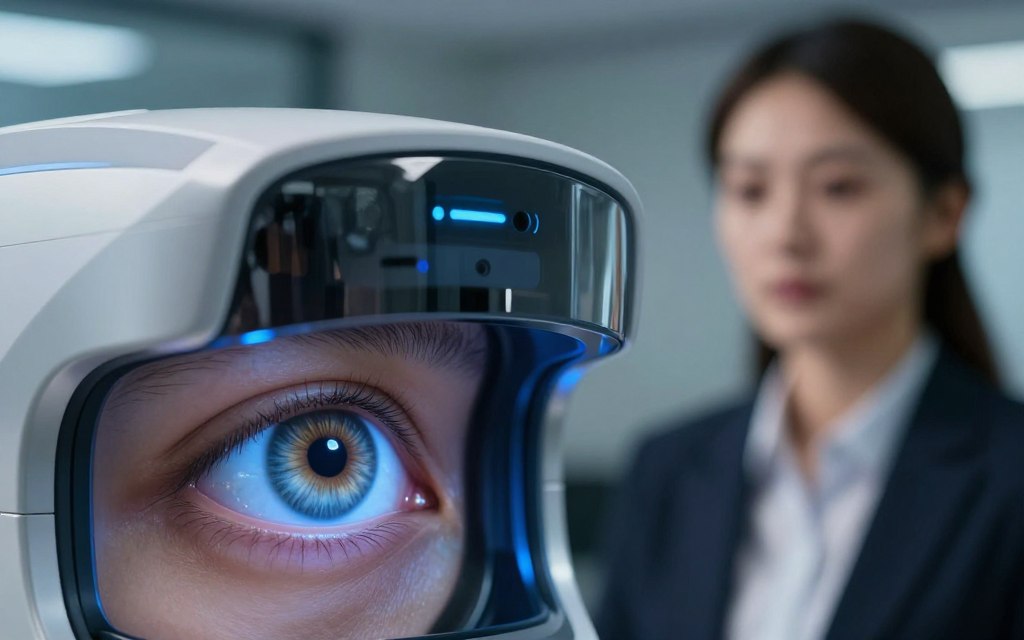
The iris is the colored ring around the pupil, with complex patterns unique to each person. Iris recognition technology uses a camera, often with infrared light, to capture these detailed patterns. The system changes this data into a template for comparison.
Several factors can affect iris scanning. Positioning, reflections, contact lenses, glasses, pupil size, and image quality affect scan accuracy. Users need good conditions for reliable identification.
The Unique Patterns of the Iris
Each person has a unique iris pattern, making it a reliable biometric identifier. Its efficient, non-invasive design supports security and access control in many sectors.
Retina Scanning: Vascular Pattern Recognition
Retina scanning uses vascular pattern recognition to examine blood vessels at the back of the eye. It usually needs close alignment and specialized imaging equipment. This makes it less common in consumer devices than iris recognition, but useful for controlled, high-assurance authentication.
Comparing both methods reveals key differences:
| Feature | Iris Scanning | Retina Scanning |
|---|---|---|
| User Experience | Quick and non-invasive | Requires close alignment |
| Equipment Requirements | Standard cameras with infrared | Specialized imaging devices |
| Accuracy | High accuracy in various conditions | Very high accuracy in controlled settings |
| Privacy Considerations | Less intrusive | More sensitive data |
| Deployment Costs | Generally lower | Higher due to specialized equipment |
Both methods require consent and secure template storage. Their medical or highly sensitive nature makes clear governance especially important during implementation.
Voice Recognition and Speaker Verification
Voiceprint analysis identifies people through speech. It examines acoustic features, including pitch, resonance, cadence, and pronunciation. Voice biometrics uses these traits to verify or identify a speaker.
It is important to distinguish voice recognition from speech recognition. Voice recognition identifies who is speaking, while speech recognition converts spoken words into text. This difference matters when security is crucial.
Voiceprint Analysis and Acoustic Features
Enrollment begins by recording a user’s voice. The system captures multiple speech samples and creates a unique voiceprint template. The template uses spectral patterns and speech dynamics that define a person’s voice.
After creating the voiceprint, the system compares it with future samples to confirm identity. This method works well where hands-free access helps, such as phone banking and smart devices.
Applications in Phone Banking and Smart Devices
Voice biometrics has many uses across various sectors. In phone banking, it improves security by letting users authenticate transactions simply by speaking. This convenience reduces the need for PINs or passwords and makes transactions smoother and faster.
Smart devices also use voice recognition for smooth interaction. However, environmental noise, illness, and aging can affect voice quality. Accents and speech variations can also make accurate verification difficult.
Systems often use challenge phrases and anti-spoofing tools to reduce these risks. These measures confirm that the analyzed voice is genuine, not a recording or synthetic speech. Multifactor authentication and transaction-specific risk checks provide another security layer.
Voice biometrics offers major benefits, but it should serve as a convenience layer, not a standalone safeguard. This matters especially for sensitive transactions involving personal information, which need additional security measures.
Behavioral Biometrics
Behavioral biometrics studies how people use devices instead of focusing only on physical traits. It adds a unique security layer by examining user behavior. Organizations can use these patterns to improve authentication.
Keystroke Dynamics and Typing Patterns
Keystroke dynamics measures a person’s typing rhythm. Key metrics include:
- Typing speed
- Time between keystrokes
- Key-hold duration
- Common pauses
These measures form a unique typing profile for each user. Security systems can use this profile to identify users continuously.
Gait Analysis and Mouse Movement Tracking
Gait analysis checks walking patterns with several technologies, including:
- Cameras
- Smartphones
- Wearable sensors
Systems can recognize people by capturing how they walk. Mouse movement biometrics tracks cursor speed, acceleration, and click patterns. This data shows user behavior and supports continuous authentication.
Behavioral systems can verify identity throughout a session, not only at login. This helps with fraud detection and account protection.
However, these systems have limits. Injury, stress, or fatigue can change behavior and reduce accuracy; device differences and accessibility tools can also affect results.
Because behavioral biometrics often work in the background, organizations should prioritize:
- Notice and transparency
- Proportionality in data collection
- Data minimization
- User controls
- Clear retention policies
Advanced Biometric Modalities
Advanced biometrics open exciting new paths for identification. These technologies go beyond familiar fingerprint, facial, and voice recognition systems. They offer unique solutions for security and authentication with deeper analysis and greater accuracy.
Palm Print Recognition
Palm print recognition analyzes ridge patterns, lines, and surface features across much of the hand. It can provide more information than one fingerprint, making it useful for many security applications. Unique palm prints can improve identity verification.
Vein Pattern Recognition
Vein pattern recognition uses near-infrared imaging to map blood vessels beneath the skin. Because internal vein patterns are hard to copy, this method provides strong security. It is ideal for access control and payment authentication.
DNA Biometrics
DNA biometrics is highly distinctive and serves forensic science, kinship analysis, and immigration. It offers exceptional accuracy but works poorly for fast, everyday authentication. Its complexity, invasiveness, speed, cost, and privacy risks require careful review.
| Biometric Modality | Speed | Cost | Invasiveness | Privacy Risk |
|---|---|---|---|---|
| Palm Print Recognition | Fast | Moderate | Non-invasive | Low |
| Vein Pattern Recognition | Fast | High | Non-invasive | Low |
| DNA Biometrics | Slow | High | Invasive | High |
No biometric characteristic is suitable for every application simply because it is unique. Deployment must consider consent, usability, accuracy, accessibility, security, legal authority, and the consequences of a compromised identifier. For more information on biometric technologies, visit NIST’s Biometric Programs.
Applications of Biometric Technology
Biometric technology applications now improve security and efficiency across many sectors. They include government identification, consumer electronics, border control, healthcare, and financial services.
Border Control and Government Identification
A major use of biometric technology is border control and government identification. Biometric border control uses e-passports and automated passport control to verify identities faster. These systems also support visa processing and law enforcement identification.
These systems need legal authority and high accuracy. Human review helps prevent errors and protect fairness. Officials must also address discrimination while balancing security and civil liberties.
Mobile Devices and Consumer Electronics
In consumer electronics, mobile biometric authentication is now common. Fingerprint scanners, facial recognition, and voice recognition unlock devices and approve payments. They also improve security and personalize user experiences.
Biometric authentication lets users access applications quickly and securely. Challenges include false rejections and unreliable enrollment processes. Solving these issues is vital for widespread adoption.
Healthcare and Financial Services
Biometric technology supports healthcare and financial services. Biometric healthcare security helps identify patients and protect electronic health records and medication workflows. It prevents duplicate or mismatched records, helping patients receive the correct treatments.
Biometric financial services improve security during account onboarding and customer verification. They help prevent fraud and authenticate callers at call centers. They also assess transaction risks and add another layer of security.
Biometric technology works best within a layered security model. This model combines device security, passwords, behavioral analysis, and human review. Balancing convenience and operational challenges helps maximize biometric system benefits.
Privacy Concerns and Ethical Considerations
Biometric technology raises serious biometric privacy and ethical questions. As organizations collect biometric data, they must consider the risks of handling this sensitive information.
Unlike passwords, fingerprints and facial recognition cannot be changed easily. This permanence increases risks from data breaches and unauthorized access.
One main challenge is ensuring biometric data security. Organizations face breaches that can steal sensitive information, and function creep can shift data to another purpose without consent. Excessive retention can violate privacy, so organizations need strict limits and deletion procedures.
Employees with biometric data access can misuse it, causing unauthorized surveillance or identity theft. The risk of re-identification can also weaken privacy efforts by linking anonymized data to individuals.
To reduce these risks, organizations should use strong security practices. These practices include encryption during transfer and storage, strict access controls, and independent audits. A privacy-by-design approach adds privacy concerns during biometric system development.
Data Security and Storage Challenges
Biometric data storage creates unique challenges. Organizations must secure it against unauthorized access through advanced encryption and limited access for authorized personnel.
Organizations should also collect only the biometric data necessary for their operations. This principle of data minimization reduces the possible impact of data breaches.
Regulatory Frameworks in the United States
The legal landscape for biometric privacy in the United States is complex and decentralized. State laws govern how biometric data is collected, stored, and used. For example, Illinois’ Biometric Information Privacy Act requires consent before collecting biometric data.
Texas and Washington have also enacted their own biometric privacy laws. Organizations must navigate these laws, including consumer privacy statutes and sector-specific requirements. Companies should track legal changes and consult qualified legal professionals to ensure compliance.
Informed notice and consent are critical when organizations collect biometric data. Organizations should explain how they use the data and offer reasonable alternatives to people who do not wish to participate. Ongoing bias testing and human oversight help maintain fairness and accountability in biometric systems.
As biometric technology continues to advance, privacy and ethical concerns become more important. Organizations must prioritize biometric data security. They must follow applicable United States biometric privacy laws to protect individual rights and maintain public trust.
Conclusion
Biometric technology offers a clear view of the future of secure identity verification. A sensor captures unique physical or behavioral traits. Software extracts key features and creates a template for matching, making biometric identity verification accurate and efficient.
Each biometric method, including fingerprints, facial recognition, and iris scans, has strengths and limits. These methods improve security but raise questions about biometric privacy and security. Secure biometric authentication needs liveness detection and safe template storage to protect user data and support reliable identity verification.
The future of biometric technology looks promising. Multimodal systems and better anti-spoofing methods may improve security. Privacy-enhancing computation and adaptive risk analysis may address data misuse concerns while balancing security, individual privacy, and control over personal data.
Biometric systems can streamline identity verification, but responsible design and governance remain essential. By prioritizing ethical considerations, we can ensure advancements in biometric technology benefit everyone without compromising privacy or fairness.