

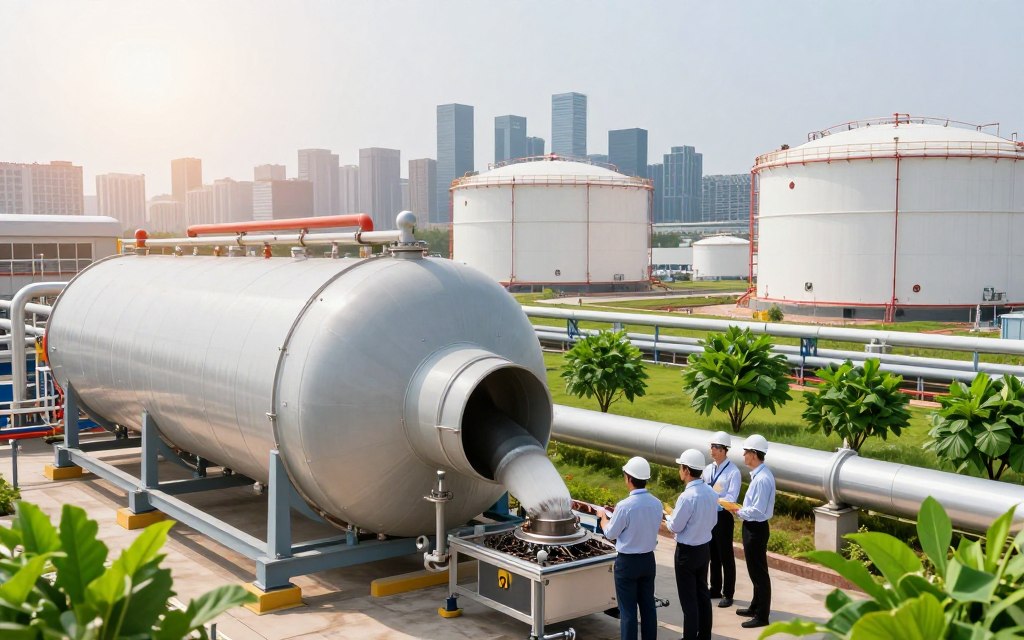
The urgent need to address climate change has increased interest in new ways to reduce CO₂ emissions. The carbon capture process removes carbon from industrial sources and plays a crucial role. This approach supports other strategies for building a sustainable future.
Carbon capture systems remove carbon dioxide from concentrated emissions, often produced by industrial facilities. This matters for cement, steel, and chemical sectors, where electrification can be difficult. These systems do not replace renewable energy or efficiency measures, but they can lower emissions from hard-to-decarbonize industries.
This article explains how carbon capture technology works, including separation, compression, transportation, and storage. It also covers associated costs and federal incentives. Long-term environmental safeguards help these systems fight climate change effectively.
Key Takeaways
- Carbon capture is essential for reducing emissions from hard-to-electrify industries.
- This process complements renewable energy and energy efficiency efforts.
- Understanding the capture process is crucial for effective climate policy.
- Federal incentives play a significant role in promoting carbon capture initiatives.
- Long-term environmental safeguards are vital for sustainable implementation.
The Climate Crisis and the Urgent Need for Carbon Capture
The ongoing climate crisis demands immediate action to cut greenhouse gas emissions. Carbon dioxide (CO₂) is a major cause of global warming. CO₂ from United States electricity, transport, and industry builds up, drives climate change, and threatens ecosystems and human health.
Reducing CO₂ is essential for addressing climate change in the United States. Several strategies can help:
- Improving energy efficiency in homes and industries
- Transitioning to cleaner electricity sources
- Electrifying transportation
- Utilizing lower-carbon fuels
Some emissions are hard to eliminate, especially from industrial processes that release CO₂ through chemical reactions, not only fuel combustion. Carbon capture technology supports industrial decarbonization by addressing these residual emissions. It captures CO₂ at the source and keeps it from entering the atmosphere.
Why CO₂ Emissions Remain a Pressing Problem in the United States
Despite efforts to reduce greenhouse gas emissions, CO₂ levels continue to rise. Major sources include fossil fuels for electricity and heat, plus cars, trucks, and planes. Industrial activities, including cement and steel production, also contribute.
- Fossil fuel combustion for electricity and heat
- Transportation, including cars, trucks, and planes
- Industrial activities such as cement and steel production
- Residential and commercial heating
Each sector adds significantly to the overall carbon footprint. This makes comprehensive solutions necessary for tackling the problem effectively.
The Role of Carbon Capture in Achieving Net-Zero Goals
Achieving net-zero emissions is a critical goal for fighting climate change. This means cutting emissions as much as possible and capturing and storing remaining CO₂. Carbon capture technology plays a crucial role in this process.
Related Posts:






- Reduce emissions from hard-to-decarbonize sectors
- Facilitate the transition to net-zero by capturing residual emissions
- Support permanent geological storage of CO₂
Point-source capture and direct air capture target atmospheric CO₂, but their costs, technical needs, and climate roles differ. Understanding these differences is essential for effective strategies aligned with net-zero goals.
What Is Carbon Capture Technology?
Carbon capture technology is a key innovation in the fight against climate change. It uses engineered systems to separate carbon dioxide (CO₂) from gas streams before they reach the atmosphere. This process helps limit greenhouse gases and supports broad emissions reduction efforts.
Carbon capture and storage (CCS) links three steps: capturing gas, transporting it, and storing or using it. It moves the gas to a storage or utilization site, then injects it into suitable rock for long-term containment.
Defining Carbon Capture and Storage (CCS)
Carbon capture and storage (CCS) technology supports carbon sequestration by capturing CO₂ from power plants and industrial processes. Captured gas can be stored underground or used in industrial applications. According to the Global CCS Institute, “CCS is a crucial tool for achieving net-zero emissions and combating climate change.”
How Carbon Capture Differs from Carbon Reduction
Carbon capture manages emissions that remain in a process stream, while carbon reduction prevents or avoids emissions. Strategies include replacing fossil fuels with renewable energy, improving efficiency, and changing industrial processes to reduce energy demand. Knowing this difference matters because emissions reduction strengthens carbon capture technology.
CCS technology depends on the full process chain, including capture rates, energy needs, transport safety, and storage integrity. Monitoring and verification help keep stored CO₂ contained and prevent leaks into the atmosphere.
| Aspect | Carbon Capture | Carbon Reduction |
|---|---|---|
| Focus | Management of existing emissions | Prevention of emissions |
| Method | Separation and storage of CO₂ | Use of renewable energy and efficiency improvements |
| Long-term Impact | Reduces atmospheric CO₂ | Minimizes future emissions |
How Carbon Capture Technology Works: The Core Process
The carbon capture process helps reduce greenhouse gas emissions through several stages. Understanding these stages shows how technology can help fight climate change. The system captures, separates, compresses, and transports CO₂ for storage.
Stage One: Capturing CO₂ at the Source
First, systems capture CO₂ near industrial sources: power plants, cement kilns, hydrogen facilities, refineries, and natural gas processing plants. They match each exhaust stream’s composition, temperature, pressure, and flow rate. This point-source capture improves efficiency by capturing CO₂ before it enters the atmosphere.
Stage Two: Separating and Compressing the Gas
After capture, the gas must be separated from nitrogen, water vapor, and sulfur compounds. This CO₂ separation makes the gas pure enough for later handling. Dehydration and carbon dioxide compression create a dense phase for transport, but energy use lowers efficiency when judging emissions.
Stage Three: Transporting Captured CO₂
The final stage moves compressed CO₂ to storage sites. Transport may use dedicated CO₂ pipelines, ships, rail, or trucks. The best option depends on distance, volume, and geography.
Pressure control and corrosion prevention are critical during transport. Route planning and emergency procedures support safety and regulatory compliance. The carbon capture process works only when capture, transport, and permanent storage form a verified system.
| Stage | Description | Key Considerations |
|---|---|---|
| Stage One | Capturing CO₂ at the source | Source type, exhaust characteristics |
| Stage Two | Separating and compressing the gas | Energy consumption, efficiency |
| Stage Three | Transporting captured CO₂ | Pressure management, route planning |
The Three Main Types of Carbon Capture Systems
Industrial carbon capture includes three main system types. Each type captures carbon dioxide (CO₂) emissions, helping reduce climate change. Knowing these systems helps industries choose the right option.
Post-Combustion Carbon Capture
Post-combustion capture removes CO₂ from flue gas after fuel burns. It can often be added to existing facilities. However, dilute gas and contaminants can make separation more complex.
Solvents or other separation systems selectively remove CO₂ from the exhaust stream. This method works for many plants, but space, energy use, and facility age affect results.
Pre-Combustion Carbon Capture
In pre-combustion capture, fuel first becomes synthesis gas, made of hydrogen and CO₂. A shift reaction then creates a concentrated mixture, so CO₂ removal becomes easier. This process separates CO₂ before burning fuel and can improve efficiency in some uses.
Pre-combustion capture is especially useful in integrated gasification combined cycle (IGCC) plants. It can greatly cut emissions while generating energy.
Oxy-Fuel Combustion Capture
Oxy-fuel combustion burns fuel with pure oxygen instead of air. After water vapor is removed, the exhaust contains much more CO₂, improving capture. Although promising, this method needs energy-intensive oxygen production, which can reduce overall efficiency.
Plant design, fuel type, operating conditions, and retrofit needs often guide the choice. Each system has strengths and challenges for different industrial applications.
| Type of Capture | Process Description | Advantages | Challenges |
|---|---|---|---|
| Post-Combustion | Captures CO₂ from flue gas after combustion. | Can retrofit existing plants. | Lower CO₂ concentration; potential contaminants. |
| Pre-Combustion | Converts fuel to synthesis gas before combustion. | Higher CO₂ concentration; easier separation. | Requires specialized technology and infrastructure. |
| Oxy-Fuel Combustion | Burns fuel with pure oxygen for higher CO₂ output. | Efficient CO₂ capture post-combustion. | Energy-intensive oxygen production. |
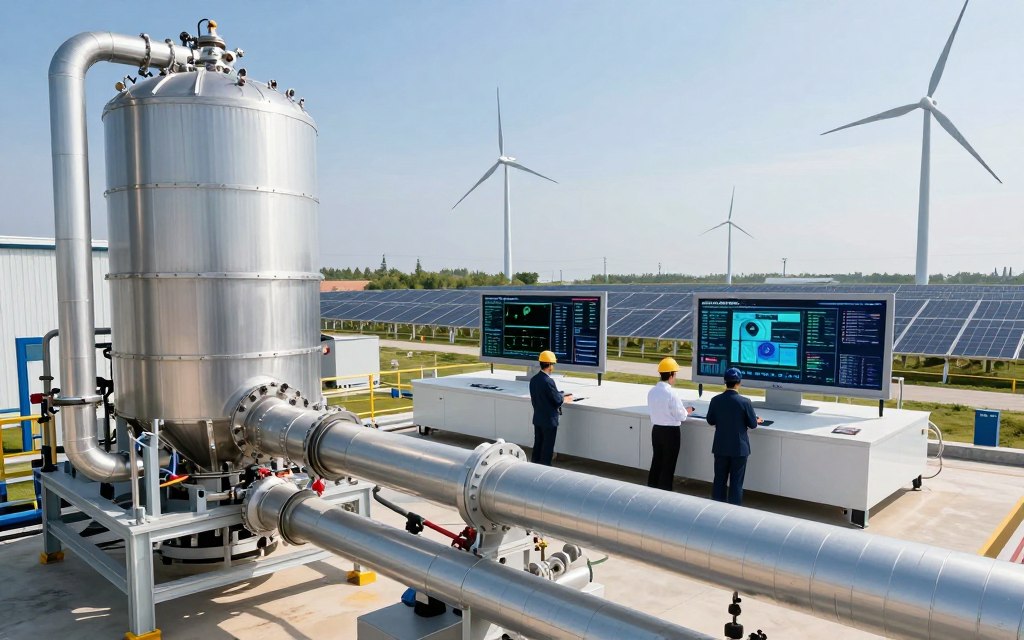
Key Technologies Behind Carbon Separation
Understanding key technologies behind carbon separation is essential for advancing carbon capture efforts. They use differences in chemical reactivity, molecular size, phase behavior, or surface attraction to separate CO₂ from other gases. We examine three methods: chemical absorption with amine solvents, membrane separation, and cryogenic separation with solid sorbents.
Chemical Absorption Using Amines
Chemical absorption uses amine solvents to react selectively with CO₂ in an absorber column. Flue gas enters the column, and the solvent captures CO₂.
After saturation, a regeneration unit heats the solvent and releases concentrated CO₂. It is mature and established, but may need much heat and cause solvent degradation, corrosion, and solvent byproduct emissions.
Membrane Separation Technology
Membrane separation technology uses thin, selective materials. Under pressure differences, these materials let some molecules pass faster than others. The method is compact and modular, so it suits many applications.
However, gas pretreatment, multiple stages, or higher pressure may be needed for the desired purity. Despite these challenges, membrane carbon capture offers a promising way to separate CO₂ efficiently.
Cryogenic Separation and Solid Sorbents
Cryogenic separation cools gas until CO₂ condenses or solidifies. It works better for concentrated, high-pressure streams than dilute flue gas. It benefits specific industrial applications with high CO₂ concentrations.
Solid sorbents capture CO₂ on surfaces or in pores, then regenerate through heat, pressure changes, or vacuum. Each method has strengths and weaknesses, and no approach suits every facility.
| Technology | Advantages | Challenges |
|---|---|---|
| Chemical Absorption | Mature technology, high efficiency | High heat demand, solvent degradation |
| Membrane Separation | Compact, modular deployment | Requires pretreatment, multiple stages |
| Cryogenic Separation | Effective for high-pressure streams | Less effective for dilute flue gas |
| Solid Sorbents | Regenerable, versatile | Performance varies with conditions |
Carbon Capture Applications Across U.S. Industries
Carbon capture applications help U.S. industries cut greenhouse gas emissions. They matter most in sectors that release large amounts of these gases. These solutions can lower industrial carbon footprints and support a more sustainable future.
Power Generation and Coal-Fired Plants
In power generation, power plant carbon capture can treat concentrated exhaust from coal-fired and natural gas plants. It captures CO₂ before release, but installing systems may reduce net electricity output. Plant age, operating hours, and fuel choice affect results; renewable energy and storage may also limit feasibility.
Cement, Steel, and Heavy Manufacturing
Cement industry emissions largely come from heating limestone, which releases significant carbon dioxide. Efficiency cannot fully remove these process emissions, so capture suits blast furnaces, hydrogen production, and other high-temperature operations. These applications support steel decarbonization and reduce overall emissions.
Oil and Gas Operations Including Enhanced Oil Recovery
Oil and gas facilities use capture to separate CO₂ during natural gas processing. Captured CO₂ can support enhanced oil recovery (EOR), raising production, but EOR may offer only short-term benefits. Long-term storage must prevent atmospheric return, while lifecycle accounting, methane control, and energy use determine climate benefits.
| Industry | Carbon Capture Application | Key Benefits |
|---|---|---|
| Power Generation | Capturing CO₂ from exhaust | Reduces emissions, enhances sustainability |
| Cement | Process emissions capture | Addresses emissions that efficiency cannot eliminate |
| Steel Manufacturing | Blast furnace CO₂ capture | Facilitates decarbonization efforts |
| Oil and Gas | CO₂ separation and EOR | Increases oil recovery, potential for storage |
Storing Captured CO₂: Methods and Long-Term Challenges
Securely storing captured CO₂ is essential for long-term climate benefits. Carbon storage methods help keep this greenhouse gas from returning to the atmosphere. Geological sequestration and mineral carbonation are the two main methods, each with benefits and challenges.
Geological Sequestration in Underground Reservoirs
Geological sequestration injects captured CO₂ into deep underground formations. These formations include depleted oil and gas reservoirs and deep saline aquifers. This underground CO₂ storage uses several ways to contain the gas:
- Structural trapping: CO₂ is trapped by impermeable rock layers.
- Residual trapping: Some CO₂ remains trapped in the pore spaces of rocks.
- Dissolution: CO₂ dissolves into formation fluids over time.
- Mineral reactions: Over long periods, CO₂ can react with minerals to form stable carbonates.
Mineral Carbonation and Permanent Storage
Mineral carbonation changes CO₂ into stable carbonate minerals through reactions with natural rocks or industrial by-products. It can provide permanent carbon storage. However, it needs suitable feedstocks and may use substantial material, water, or energy.
Monitoring, Verification, and Leak Prevention
Both methods face long-term challenges, including site characterization and well integrity. Carbon storage monitoring is vital for tracking how stored CO₂ behaves. Monitoring technologies include:
| Monitoring Method | Description |
|---|---|
| Seismic Surveys | Used to detect changes in subsurface structures. |
| Pressure Measurements | Monitor pressure changes in storage formations. |
| Plume Tracking | Tracks the movement of CO₂ within the storage site. |
| Soil Testing | Detects potential leaks through soil gas analysis. |
| Atmospheric Monitoring | Measures CO₂ levels in the atmosphere near storage sites. |
In conclusion, secure storage of captured CO₂ is crucial to successful carbon capture technologies. It combines advanced methods with rigorous monitoring, keeping stored CO₂ safely contained. For more detailed information on carbon capture and storage, visit this link.
The Economics and Policy Landscape of Carbon Capture in the United States
Federal climate policy and carbon capture incentives strongly affect the economic viability of carbon capture technologies. Projects often need major capital investment, which can make revenue uncertain. Costs include capture equipment, energy, CO₂ transport, storage wells, monitoring, permits, and maintenance.
The 45Q tax credit is a key part of U.S. carbon capture policy. This U.S. tax code provision gives financial benefits to qualifying carbon capture, utilization, and storage projects. It has helped drive carbon capture project investment, while credit amounts and eligibility rules affect project feasibility.
- Wage and apprenticeship conditions: These are often tied to the credit, ensuring that local labor is employed.
- Direct-pay or transferability provisions: These allow projects to receive upfront cash instead of waiting for tax credits.
- Start-construction deadlines: Projects must adhere to specific timelines to qualify for credits.
State programs, grants, and loan guarantees can also shape the economics of carbon capture. Clean hydrogen incentives and industrial demonstrations further shape this landscape.
Major U.S. Carbon Capture Projects and Investments
Several significant carbon capture projects are currently underway across different sectors. Their development stages include the following:
- Operating facilities: These are fully functional and actively capturing CO₂.
- Announced projects: These have been publicly disclosed but are yet to commence.
- Proposed projects: These are in the planning stages, pending further approvals.
- Delayed or canceled projects: These have faced obstacles that hinder their progress.
Permitting, pipeline siting, community consent, and storage characterization can strongly affect investment decisions. Tax credit certainty, electricity prices, and corporate emissions targets also shape the appeal of these investments.
Conclusion
Carbon capture technology is a key tool in the fight against climate change. It captures CO₂ from industrial sources or directly from air, then separates, compresses, and transports it for storage or use. This process helps sectors like cement, steel, and chemicals, where emissions are concentrated and hard to remove fully.
Although the carbon capture benefits and challenges are important, carbon capture needs much energy, infrastructure, and investment. Success depends on strict oversight and public trust. Each project’s climate value depends on its full life cycle, including capture rates and safe storage methods.
In a complete net-zero strategy, carbon capture is one of several critical tools. It must work with clean electricity, energy efficiency, and sustainable land management to cut emissions meaningfully. Research and verified results will shape the future of carbon capture and help meet climate goals.
Balancing innovation with regulation will help this climate technology deliver a sustainable future.